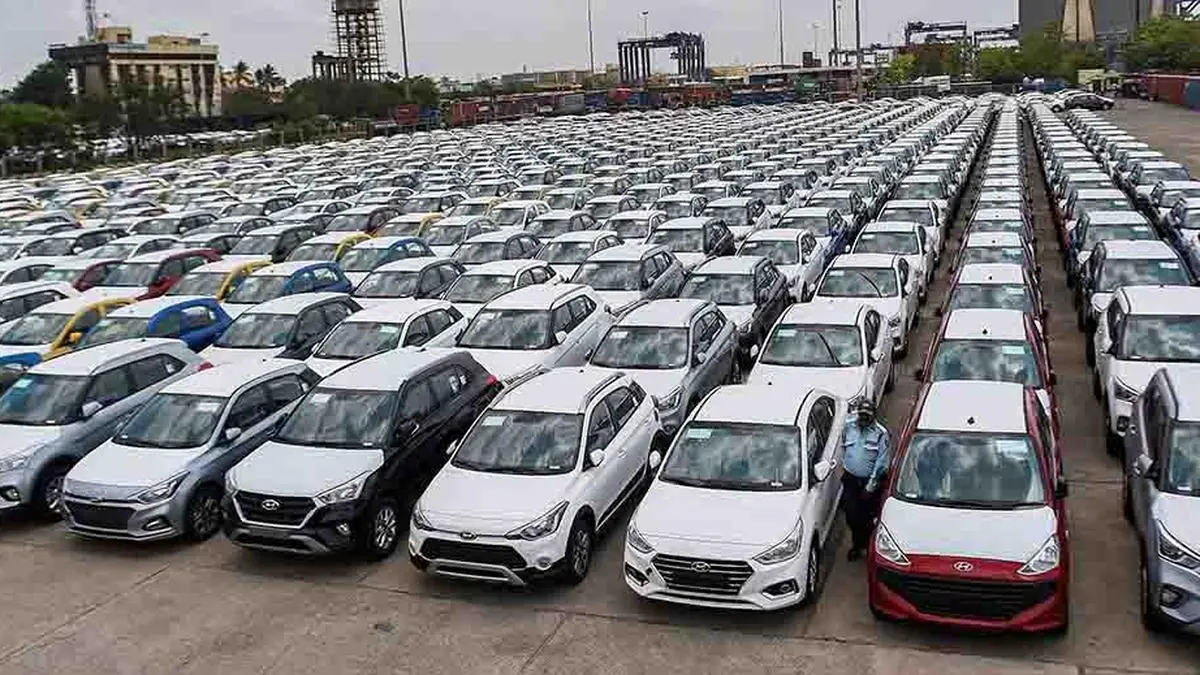
On March 26 this year, the US adopted a safeguard measure in the form of a tariff increase of 25 per cent ad valorem on imports of passenger vehicles and light trucks, and on certain automobile parts from India.
| Photo Credit:
R Senthil Kumar
India has notified to the WTO that it proposes to impose retaliatory duties on US goods in response to the 25 per cent safeguard duties imposed by the country on the automobiles sector.
Indian retaliatory duties on the US would result in duty collection of $723.75 million, at par with US duty collection on Indian auto sector exports, per a submission made by the country on Friday to WTO Council for Trade in Goods.
“The safeguard measures (of the US) would affect $2895 million imports annually into the US of the relevant products originating in India, on which the duty collection would be $723.75 million,” the notification stated.
India’s plan
Accordingly, India’s proposed suspension of concessions would result in an equivalent amount of duty collected from products originating in the US, it added.
Through the notification, India has reserved its right to impose retaliatory duties on the US, but has not taken a decision to do so yet.
On March 26 this year, the US adopted a safeguard measure in the form of a tariff increase of 25 per cent ad valorem on imports of passenger vehicles and light trucks, and on certain automobile parts from India. These measures apply from May 3, 2025 as regards automobile parts, and for an unlimited duration
“The measures have not been notified by the US to the WTO, but are, in essence, safeguard measures. India maintains that the measures taken by the US are not consistent with the GATT 1994 and AoS,” the submission said.
As consultations provided for under WTO rules have not taken place, India reserves the right to suspend concessions or other obligations that are substantially equivalent to the adverse effects of the measure to India’s trade, it added.
Earlier, India notified to the WTO its proposal to impose retaliatory duties on US goods in response to the 25 per cent tariffs imposed on steel and aluminium, which were subsequently raised by Washington to 50 per cent.
Published on July 4, 2025