
Flex Circuit Manufacturer Hold for Quality Assuring
Flex circuits are an important part of modern electronics. They are used in many applications and must meet high quality standards. To do this, a flex circuit manufacturer must have a rigorous quality assurance process that includes testing the finished product to ensure it meets all of the required specifications. A flex circuit must also have the right raw materials and a proper flex pcb stackup.
A flex circuit is a printed circuit board with flexible conductors, and it is usually made of a combination of rigid and conductive layers laminated together to form a single structure. Its flexibility allows it to bend and shape to fit different spaces, which is beneficial in many applications. However, a flex circuit’s flexibility comes at the cost of durability. Because the layers are thinner, they are more prone to damage and must be handled carefully.
There are several different types of flex circuit manufacturer available, each designed to serve a specific purpose. Rigid flex circuits are the most common and are typically designed for high-speed applications. Rigid flex circuits must be able to withstand high-speed drilling and soldering, so they must be thicker than a flex circuit. Rigid flex circuits can also be fabricated using a variety of materials, including fiberglass and polyimide.
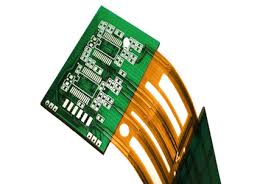
What Certifications Should a Flex Circuit Manufacturer Hold for Quality Assuring?
The best flex circuits are constructed with copper, which is the most durable material available. Copper is etched into pads and traces in the manufacturing process, and it can be plated with silver inks to reduce noise or EMI. A flex circuit’s design must consider how much it will be bent and the maximum number of times it can be bent before the copper becomes damaged. Ideally, a flex circuit should have a minimum bend radius of 10 mils to prevent stress and distortion.
It is also essential to consider the thickness of a flex circuit’s conductors. Thicker conductors are more prone to compression and stress during bending. To prevent this, it is important to stagger the conductors across a flex circuit’s layer stacks and to place them around the neutral bend axis. The neutral bend axis is the axis that experiences the least amount of strain and stress during bending.
Another crucial consideration is the type of copper plating that a flex circuit manufacturer uses. Copper foil is commonly etched into a flex circuit, but there are other materials that can be used as well. Choosing the correct type of foil is important because it will affect the conductor’s performance and price. In addition, the copper thickness must be consistent to ensure that a flex circuit’s circuit traces have the proper impedance.
A flex circuit should have adequate shielding to protect it from electromagnetic interference (EMI). This can be accomplished with solid copper layers or cross-hatched copper layers. The type of shielding selected should be determined early in the design phase to ensure that it will be compatible with the other components in the flex circuit’s layout. The flex circuit should be tested for EMI and bend requirements to guarantee its integrity and functionality.

